Every alarm trigger is confirmed on live video before a call goes to police, so real events get flagged as priority instead of sitting behind a queue of unverified signals. Many jurisdictions now deprioritize or decline response to unverified alarms altogether, while verified alerts are treated as higher-priority calls. For monitoring companies, verification runs entirely white label under your brand, backed either way by our operator bench and AI-assisted monitoring.
Alarm video verification means a trained operator reviews live camera footage the moment an alarm triggers, before any call goes to police. Instead of dispatch acting on a signal alone, they act on visual confirmation of an actual intrusion, break-in, or suspicious activity.
For a monitoring company, this changes how your calls get treated. Police departments across North America have scaled back or deprioritized response to unverified alarms after finding the vast majority turn out to be false. A video-confirmed alert is a different category of call, and it gets handled that way.
1Degree adds verification to your existing accounts as a white label layer. Our operator bench reviews the footage, confirms the event, and hands your team, or dispatch directly, a clear, evidenced call.

Verified alerts are treated as priority calls instead of being queued behind unconfirmed signals.

Only confirmed real events get escalated, so accounts stop paying for false-dispatch penalties.
A trained operator reviews the actual footage before any call is made, not just the sensor data.

Every alert comes with time-stamped clips, so there is a record behind each dispatch decision.
Unverified alarms create real costs for monitoring companies and their clients.
We help solve challenges like:
Video verification removes the guesswork, so every dispatch decision is backed by an actual look at what happened.
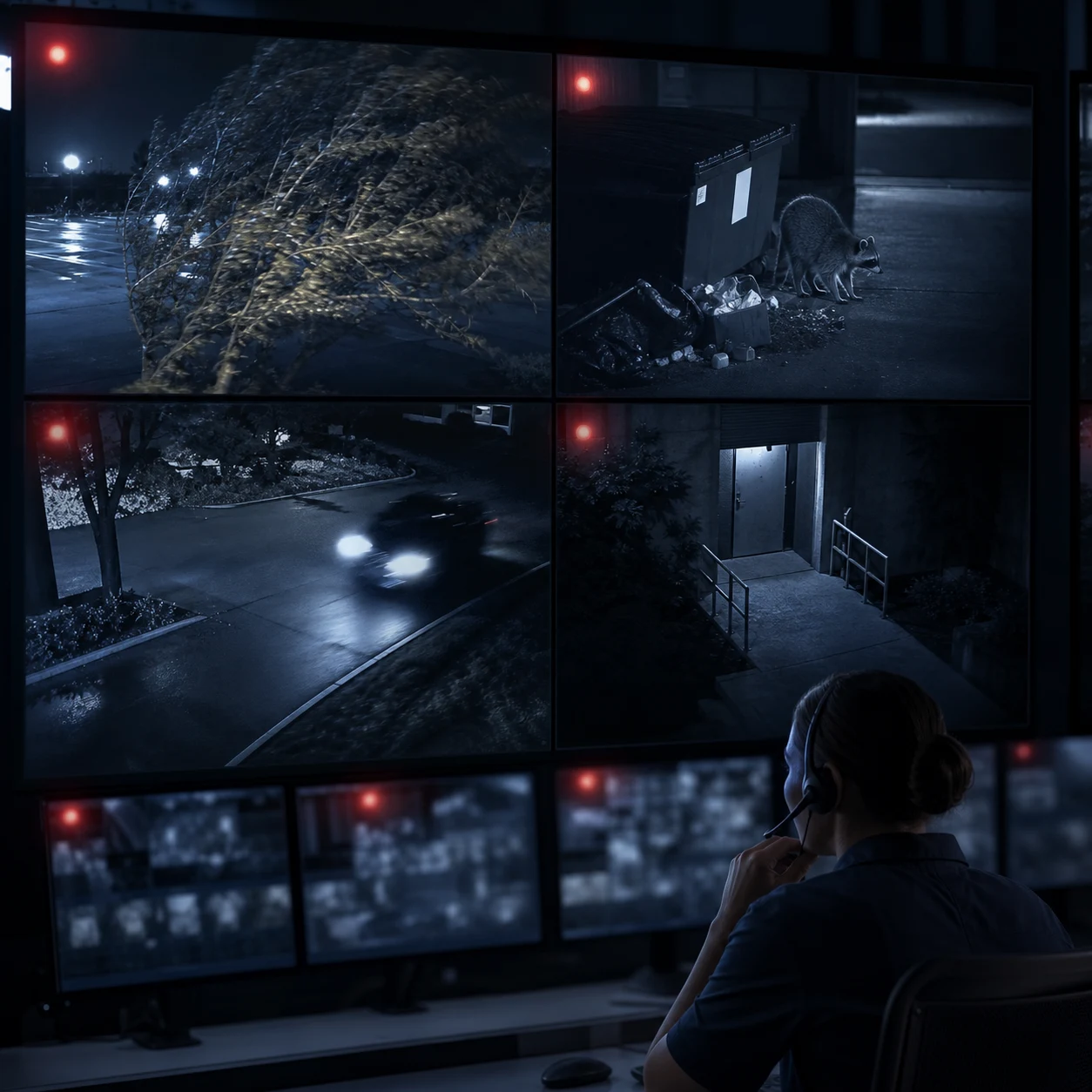
We apply the same live video confirmation process across the property types monitoring companies cover most.
Confirm break-ins and after-hours activity at office and commercial sites before dispatch is called.

Verify break-ins, loitering, and after-hours triggers at retail locations with live video review.

Confirm perimeter and yard alarms at industrial sites, where false triggers are common.

Review multi-tenant alarm triggers across shopping center properties from a single monitoring layer.

Confirm lot and showroom alarms before dispatch, reducing false calls on high-value inventory.

Verify gate and unit alarms at self-storage sites to cut down on non-event dispatches.

A structured rollout designed to confirm every account is covered before verification goes live.
We review your current alarm and camera setup across accounts to determine coverage and verification readiness.

We connect your alarm triggers to live camera feeds, so every signal pulls the right footage automatically.

We verify alarms on a subset of accounts first, to confirm accuracy and response timing before a full rollout.

Verification goes live across all your accounts, with dispatch protocols confirmed end to end.

We refine escalation protocols as patterns emerge, keeping false-alarm rates down over time.
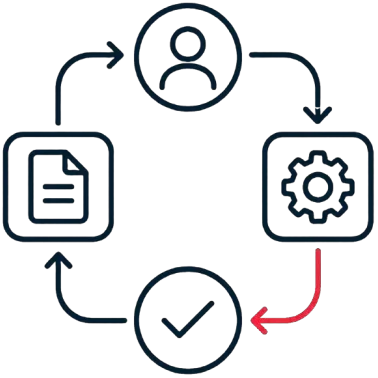
Every account gets the same core verification capability, delivered under your brand.
Every alarm trigger pulls live camera footage for immediate operator review.
A trained operator confirms whether an event is real before any call is escalated.

Two-way audio lets an operator address an intruder directly, on the spot.

Confirmed events are escalated to police as verified, priority calls.

Non-events are filtered out before they ever reach dispatch.
Every reviewed alert is logged with footage and a written summary for your records.
A verification partner built around cost, coverage, and accuracy.
Alarm review is handled by a dedicated team of trained monitoring operators, not a generic call center.
A bigger bench of trained operators means faster review times and more consistent coverage.

AI pre-filtering flags likely false triggers, and a human operator confirms every real event before escalation.
Verification pricing is built to scale with your account count, without the overhead of building this in-house.

Add verification to as many or as few accounts as you need, and adjust as your book of business changes.

The same review standard applies to every alert, every time, across every account.
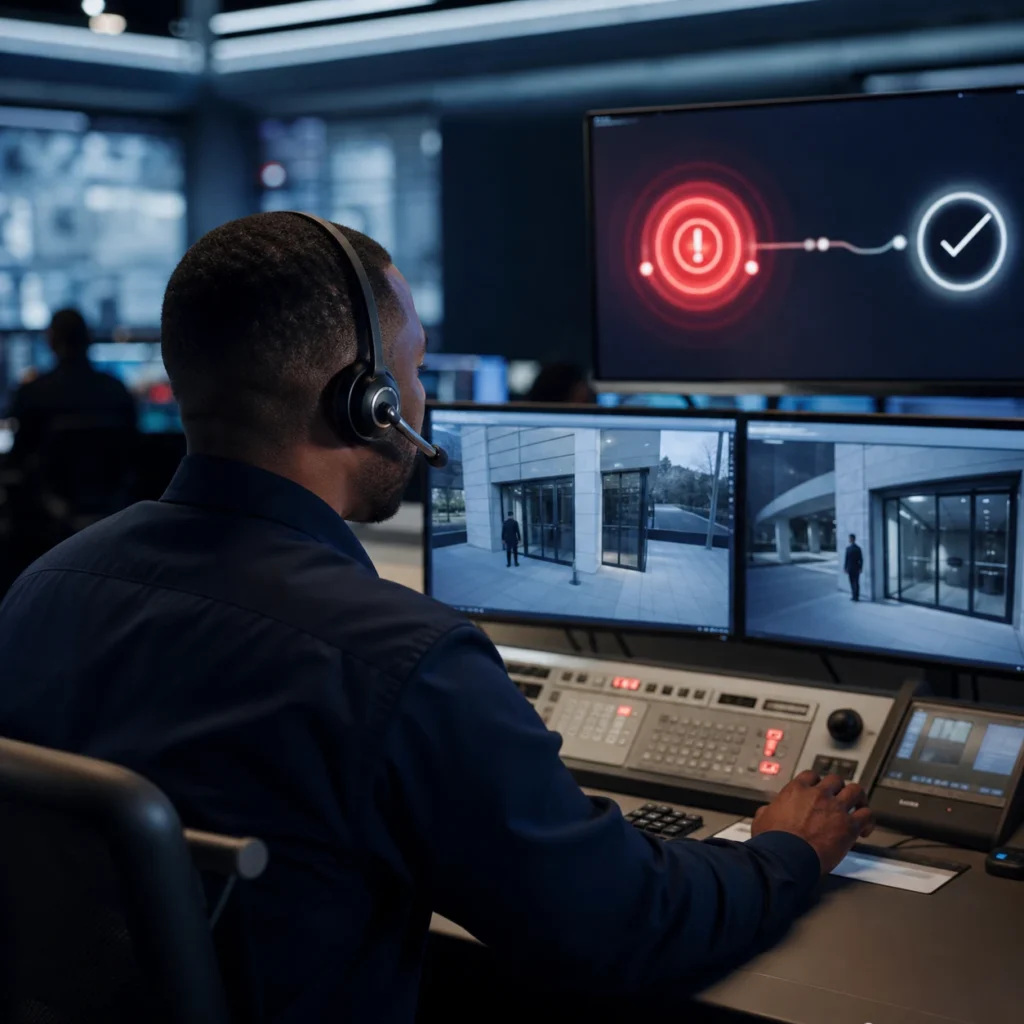
A regional monitoring company was paying recurring false-alarm fines across a portion of its commercial accounts, and police had begun deprioritizing calls tied to that alarm panel type. After adding 1Degree’s video verification as a white label layer, every trigger was reviewed against live footage before a call went out. Only confirmed events were escalated, false-alarm fines dropped, and the calls that did go through were treated as priority by dispatch.
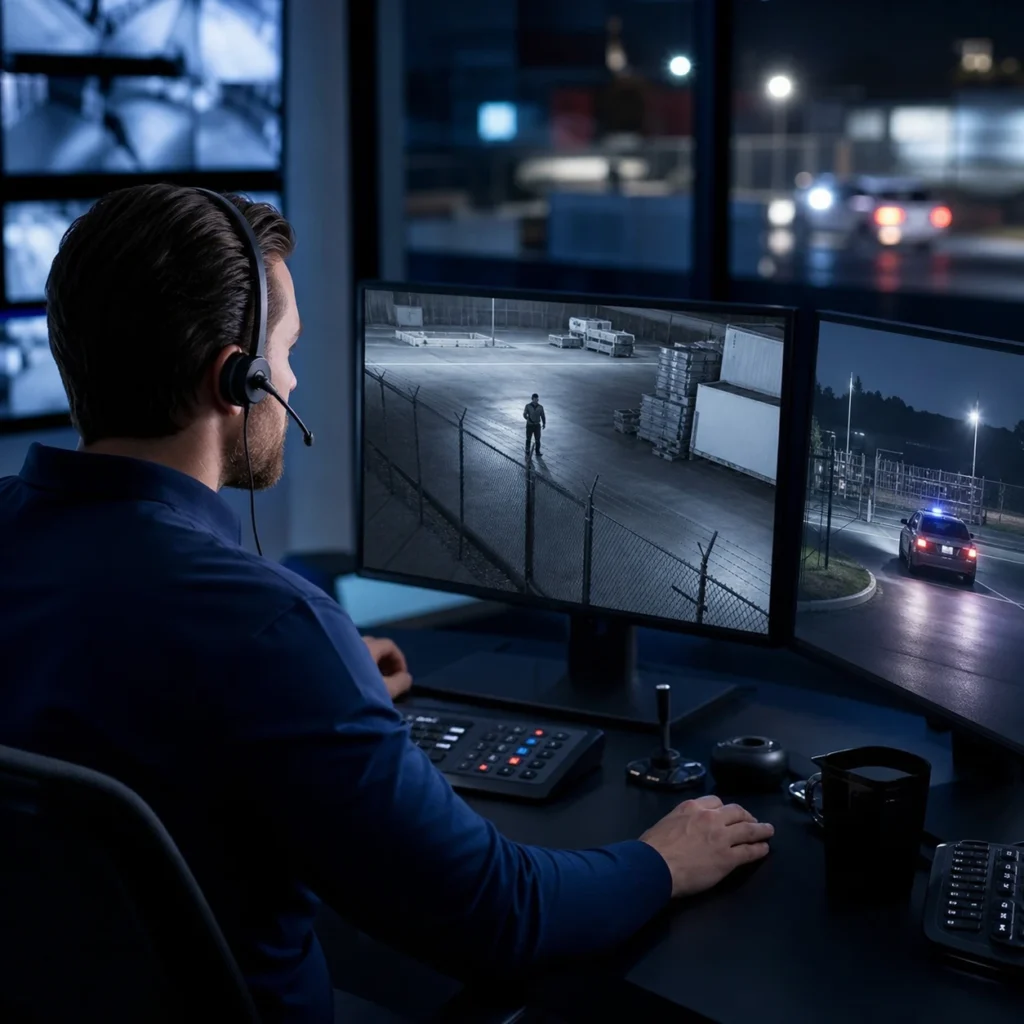
Every alert is reviewed against a documented escalation protocol, not operator judgment alone. AI pre-filtering flags likely false triggers, a trained operator confirms the footage, and escalation only happens once an event meets the criteria your account has set. Protocols are reviewed on a regular basis and adjusted as patterns change, so accuracy holds steady as account volume grows.
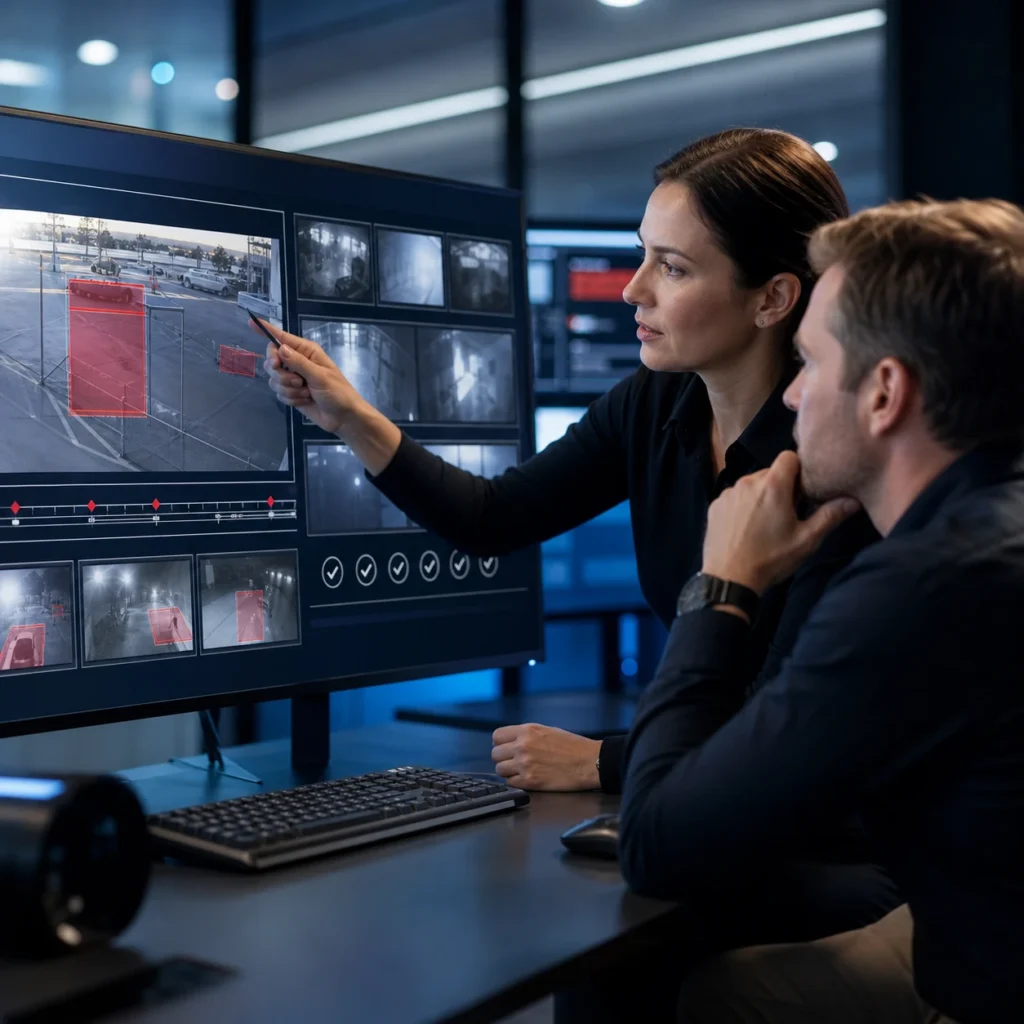
Monitoring companies, alarm dealers, and security integrators who want faster, prioritized police response on the alarms they already monitor.
Many jurisdictions deprioritize or decline dispatch on unverified alarms, since the vast majority turn out to be false. A video-confirmed alert is treated as a different category of call, and gets a faster, prioritized response.
Yes. Only confirmed real events get escalated, so accounts stop paying for repeated false-dispatch penalties.
Yes, in most cases. We work with your existing alarm panels and camera systems rather than requiring a replacement.
Cost-effective pricing and a larger, more active bench of trained operators, combined with AI-assisted monitoring rather than cameras alone.
Pricing scales with your account and camera count. We provide a custom quote after a free assessment of your current setup.